Time Period: World War I
Country of Origin: United Kingdom
Type: Biplane, Reconnaissance and Surveillance, Night Bomber, Fighter Aircraft
Manufacturer: Royal Aircraft Factory
Royal Aircraft Factory F.E.2 Aircraft Overview
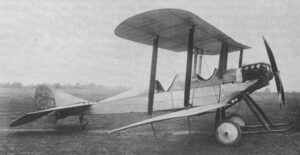
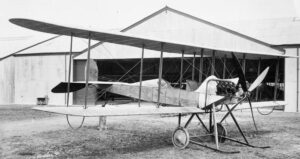
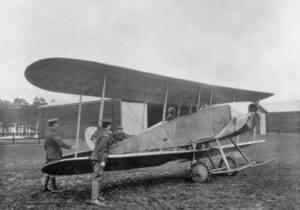
The Royal Aircraft Factory F.E.2 was a British two-seat biplane bomber and reconnaissance aircraft that saw service during World War I. It was designed to replace the earlier B.E.2 and B.E.12 aircraft and was notable for its unusual pusher configuration, where the engines were mounted behind the cockpit, and the propellers faced backward.
The F.E.2 entered service in 1915 and was used for a variety of missions, including bombing, reconnaissance, and ground attack. It was also used as a fighter in some instances, although its slow speed and large size made it vulnerable to attack.
The F.E.2 was produced in a number of variants, with improvements made to the engine, armament, and overall design over the course of the war. It was armed with a variety of weapons, including machine guns and bombs, and was flown by a crew of two, a pilot and an observer/gunner.
The F.E.2 was well-regarded for its stability and ease of handling, and it was particularly effective as a bomber and reconnaissance aircraft. However, it was also known for its relatively slow speed and vulnerability to attack, particularly as German fighter aircraft became more advanced later in the war.
Despite its limitations, the F.E.2 remained an important aircraft throughout World War I, and it played a key role in the development of aerial warfare and military aviation in general.
Royal Aircraft Factory F.E.2 Specifications
- Crew: 2
- Length: 32 ft 3 in (9.83 m)
- Wingspan: 47 ft 9 in (14.55 m)
- Height: 12 ft 8 in (3.86 m)
- Wing area: 494 sq ft (45.9 m2)
- Empty weight: 2,061 lb (935 kg)
- Gross weight: 3,037 lb (1,378 kg)
- Powerplant: 1 × Beardmore 6-cylinder water-cooled in-line piston engine, 160 hp (120 kW)
- Propellers: 4-bladed wooden fixed-pitch pusher propeller.
Royal Aircraft Factory F.E.2 Performance
- Maximum speed: 91.5 mph (147.3 km/h, 79.5 kn)
- Endurance: 3 hours
- Service ceiling: 11,000 ft (3,400 m)
- Time to altitude: 10,000 ft (3,048 m) in 39 minutes 44 seconds
- Wing loading: 6.15 lb/sq ft (30.0 kg/m2)
- Power/mass: 0.053 hp/lb (0.087 kW/kg).