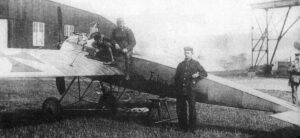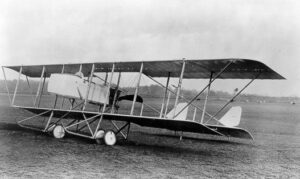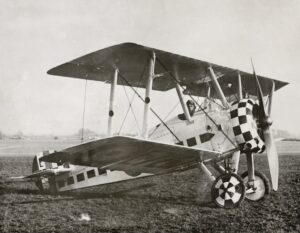
Royal Aircraft Factory S.E.5a
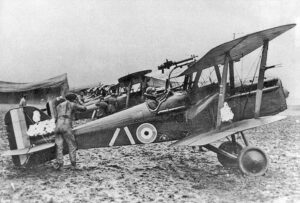
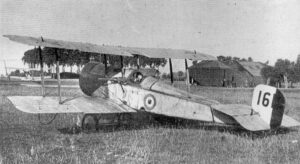
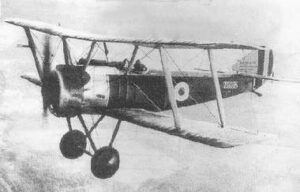
The Royal Aircraft Factory S.E.5a was a British fighter aircraft designed by the Royal Aircraft Factory and used during World War I.
World War I (or the Great War) was the first major conflict that involved the large-scale use of warplanes and aircraft. In the past, some countries had used Zepellins and observation balloons for reconnaissance; however, during WW1, airplanes became widespread – particularly at the outset of the war. During this time, engineers and pilots had to learn from experience, as there wasn’t much development to rely on. This is why many specialized types of aircraft were created during the WW1 period.
These aircraft epitomize the innovation and courage that defined the first major conflict in the air. So, step back in time and discover the engineering marvels and valiant stories behind these featured warplanes from World War I.

The Royal Aircraft Factory S.E.5a was a British fighter aircraft designed by the Royal Aircraft Factory and used during World War I.

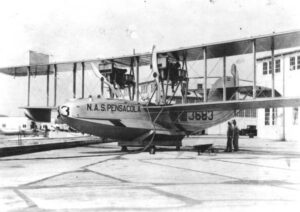
The Aeromarine 75 or Felixstowe F5L was a military flying boat manufactured during WW1 and first flown on 15 July 1918.

The Nieuport 17 was a French sesquiplane fighter aircraft designed by the Nieuport company and used during World War I.

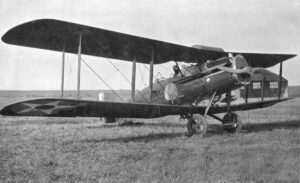
The Sopwith Camel is a British WW1 single-seat biplane fighter that was used in the Western Front in 1917.

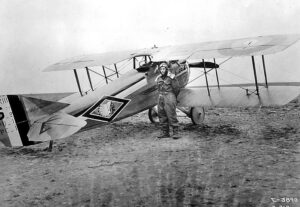
The SPAD S.XIII was a French biplane fighter aircraft produced by Société Pour L’Aviation et ses Dérivés and used during World War I.
Follow the events and milestones of World War I.
July 28, 1914
April 1, 1915
May 31, 1916
April 6, 1917
November 11, 1918
The outbreak of World War I marked the onset of rapid aviation advancements, initially used for reconnaissance.
The Fokker Eindecker E.I, a German monoplane, introduced synchronized machine guns, making it the first purpose-built fighter aircraft.
The Battle of Jutland showcased the increasing importance of aircraft in reconnaissance during naval warfare.
The U.S. entry into World War I significantly boosted Allied air forces, contributing to the development and deployment of new aircraft.
The Armistice, ending World War I, marked the transition to advanced fighter and bomber aircraft, laying the foundation for future aviation evolution.
World War I marked a pivotal moment in the history of aviation, witnessing the rapid evolution of aircraft from fragile and experimental machines to formidable warplanes. The United Kingdom played a significant role in this transformation, contributing innovative designs and skilled aviators to the conflict. Here are some notable WWI aircraft and warplanes associated with the United Kingdom:

The Sopwith 1½ Strutter was a British single or double-seated multi-role biplane aircraft used during the First World War.

The Airco DH.2 is a single-seat biplane fighter aircraft introduced in 1915. It was the first British fighter to have a forward-firing machine gun.

The Short Bomber (also known as Short Type 184) was a British two-seat long-range reconnaissance, bombing and torpedo-carrying aircraft.

The Martinsyde S.1 was a British biplane aircraft ith a Gnome engine in tractor configuration built during the early part of World War I.

The Armstrong Whitworth F.K.3 is a British two-seat biplane built during the First World War. After the conflict, it was considered obsolete.
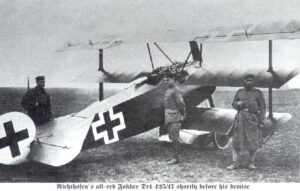
World War I marked the dawn of aerial warfare, and Germany was at the forefront of pioneering aircraft technology. German engineers and aviators introduced innovative designs that left a lasting impact on the course of aviation history. The Fokker Dr.I, a triplane famously associated with the legendary “Red Baron” Manfred von Richthofen, became an iconic symbol of German air power. And on the strategic front, the Gotha G.V twin-engine bomber showcased Germany’s commitment to long-range bombing missions.

The Albatros C.I was a two-seat general-purpose biplane built by Albatros Flugzeugwerke during World War I.

The Albatros D.III was a German fighter biplane aircraft used by the Imperial German Army Air Service (Luftstreitkräfte) during World War I.

The Siemens-Schuckert D.IV (SSW) was a German aircraft used during World WEar I (although it entered the conflict rather late)

The Fokker D.VII was one of the most advanced and effective fighter aircraft of World War I, regarded as the time’s best German fighter.

The Zeppelin LZ 10 Schwaben was a German rigid passenger airship built in 1911 by Luftschiffbau Zeppelin and operated by DELAG.
In the crucible of World War I, France emerged as a pioneering force in aviation, introducing innovative aircraft that left an indelible mark on military aviation. The SPAD S.XIII, a nimble and powerful fighter, became a symbol of French air prowess. Nieuport 17 biplanes, celebrated for their agility, played a vital role in the skies over the Western Front. Meanwhile, the Voisin III and Farman MF.11 exemplified France’s commitment to reconnaissance and bombing missions.

The SPAD S.VII was a series of successful French biplane fighter aircraft produced by Société Pour L’Aviation et ses Dérivés and used during WW1.

The Morane-Saulnier N was a French monoplane fighter used during World War I and designed by Morane-Saulnier. It was nicknamed the Bullet.

The FBA Type A was a family of French unequal-span pusher biplane reconnaissance flying boats produced before and during World War I.

The Farman MF.11 Shorthorn is a French reconnaissance and light bomber used during the early part of World War I.

The Nieuport II was a French mid-wing monoplane used for training, sporting and racing. It was noted for its high performance.