Who was the Red Baron? Manfred von Richthofen And The Luftstreitkräfte
The Red Baron, or Manfred von Richthofen, was a legendary German fighter pilot and fighter ace during World War I.
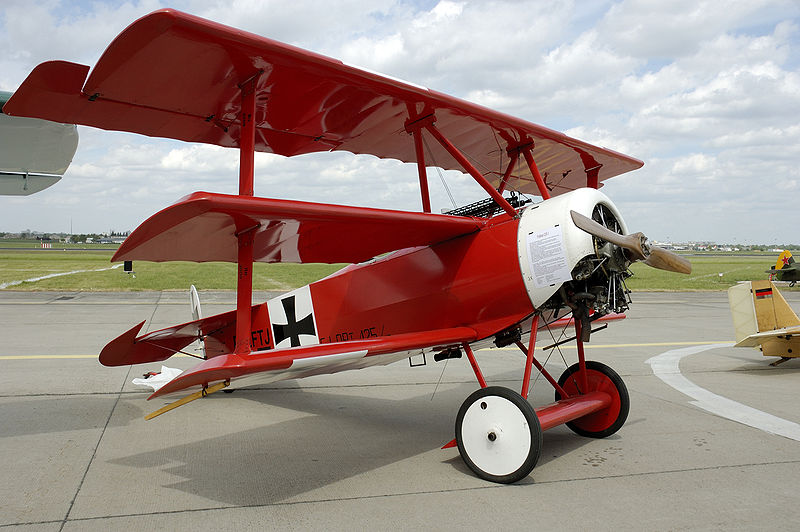
Replica of Richthofen's Fokker Dr.I triplane, at the Berlin Air Show in 2006

The Red Baron, Manfred von Richthofen, was an exceptionally skilled and effective fighter pilot. His combat tactics, marksmanship, and strategic acumen contributed to his success in aerial dogfights. Richthofen achieved a remarkably high number of aerial victories, officially credited with 80 confirmed kills. 

The Red Baron’s ability to shoot down enemy aircraft made him the top-scoring ace of World War I. As the leader of Jagdgeschwader 1 (Jasta 1), Richthofen also demonstrated strong leadership and introduced innovative tactical approaches to air combat. His leadership skills influenced the development of aerial tactics during the war. 

So, let me tell you a little more about this fighter ace, his code of chivalry, and his most memorable aircraft.

Who Was The Red Baron?

The Red Baron, or Manfred von Richthofen, was born on May 2, 1892, in Breslau, Germany (now Wroclaw, Poland).

Richthofen initially served as a cavalry officer but soon transitioned to the German Air Force, the Luftstreitkräfte, in 1915. Flying various aircraft, he quickly gained a reputation for his marksmanship, tactics, and leadership skills.

He achieved fame for his numerous aerial victories, credited with shooting down 80 Allied aircraft during his short but intense career. Richthofen’s prowess in the air, combined with his red Fokker Dr.I triplane, made him an iconic figure on the Western Front.

Rittmeister Manfred von Richthofen 1917.

Why Was von Richthofen Called "The Red Baron"?

Richthofen became known as the “Red Baron” due to his habit of painting his aircraft red, and he commanded the elite fighter squadron Jagdgeschwader 1 (Jasta 1).

His Fokker Dr.I triplane, which he used for much of his aerial combat, was prominently painted in a solid bright red color. This distinctive and easily recognizable appearance set him apart from other pilots and aircraft in the skies over the Western Front during World War I.

The decision to paint his aircraft red was not only a matter of personal preference but also served strategic and psychological purposes. The bold color made Richthofen easily identifiable to both friend and foe during aerial engagements. It is believed that he chose the color to make his presence known and to instill fear in his enemies. Additionally, it may have been a way to boost the morale of his own squadron, Jagdgeschwader 1 (Jasta 1).

Richthofen’s red aircraft became an iconic symbol, and his nickname, “The Red Baron,” became inseparable from his legendary status as the top-scoring ace of World War I. The image of the red triplane has endured in popular culture, contributing to the lasting legacy of Manfred von Richthofen.

How Did The Red Baron Die?

Tragically, Manfred von Richthofen was killed in action on April 21, 1918, at the age of 25. The circumstances of his death remain a subject of historical debate.

Despite his relatively brief time in combat, the Red Baron’s impact on the history of aerial warfare and his status as one of the most celebrated fighter aces endure to this day.

The Red Baron's Fokker Dr.I Triplane

The Fokker Dr.I Triplane is one of the most iconic and recognizable aircraft of World War I, largely due to its association Manfred von Richthofen.

Let’s look at some key points about the Fokker Dr.I.

  • The Fokker Dr.I, designed by Reinhold Platz, was a triplane with a distinctive three-wing configuration. It was developed in response to the success of British Sopwith Triplane fighters.
  • The triplane design aimed to provide increased maneuverability and climb rate compared to biplanes. The three wings allowed for a shorter wingspan, enhancing agility.
  • The Fokker Dr.I had a compact and lightweight airframe, making it highly maneuverable in dogfights. It featured a semi-monocoque wooden fuselage and wings covered with fabric.
  • Its triplane design contributed to its exceptional rate of climb and agility, allowing for rapid changes in direction and effective turns.

Richthofen appreciated the Fokker Dr.I’s agility, especially in vertical maneuvers, and found it suitable for his aggressive and daring style of aerial combat.

However, the Fokker Dr.I was not without its drawbacks. For instance, it had a tendency to be unstable at high speeds, and pilots needed to be cautious during dives. Despite its limitations, the Fokker Dr.I was a formidable opponent in the hands of skilled pilots, and it played a significant role in the closing stages of World War I.

Fokker Dr.I Triplane - German WW1 Aircraft & Warplanes - Details
The Fokker Dr.I Triplane.
Official Fokker Dr.I Baubeschreibung drawing.

Learn More About The Red Baron

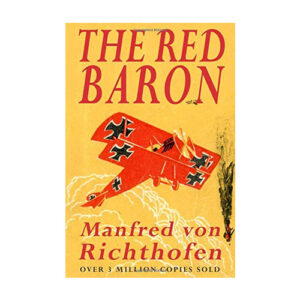
The Red Baron by Manfred von Richthofen

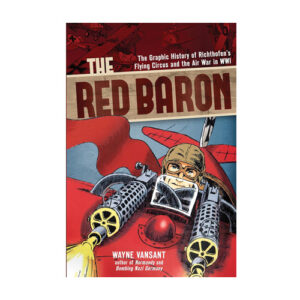
The Red Baron by Richard Fox

More Articles

More Aircraft

Nieuport II - Pre-WW1 French Aircraft & Warplanes

Nieuport II

The Nieuport II was a French mid-wing monoplane used for training, sporting and racing. It was noted for its high performance.

Read More »
Sopwith Pup - British WW1 Aircraft and Warplanes

Sopwith Pup

The Sopwith Pup was a British single-seat biplane fighter used by the Royal Naval Air Service and Royal Flying Corps during World War I.

Read More »
Bristol Scout - WW1 British Aircraft & Warplanes

Bristol Scout

The Bristol Scout was a single-seat biplane originally designed as a racing aircraft and later used as a fast reconnaissance plane.

Read More »
Junkers Ju 88 - German WW2 Aircraft & Warplanes - History, Pics

Junkers Ju 88

The Junkers Ju 88 was a German Luftwaffe twin-engined multirole combat aircraft introduced in 1939 and used widely during World War II.

Read More »
Heinkel He 112 - German WW2 Aircraft & Warplanes - History, Pics

Heinkel He 112

The Heinkel Heinkel He 112 was a German fighter aircraft designed to compete for the 1933 fighter contract of the Luftwaffe during WW2.

Read More »
Morane-Saulnier N - Pre-WW1 French Aircraft & Warplanes

Morane-Saulnier N

The Morane-Saulnier N was a French monoplane fighter used during World War I and designed by Morane-Saulnier. It was nicknamed the Bullet.

Read More »