
Voisin III
The Voisin III was a French two-seater pusher biplane aircraft developed by Voisin in 1914 and used during World War I.
Aircraft by Type > Airplanes > Bombers
Bomber aircraft have played significant roles in historical conflicts, serving as powerful assets for military forces to project force, disrupt enemy operations, and achieve strategic objectives. They continue to be an essential component of modern air forces and contribute to deterrence, power projection, and national security. So, let’s learn more about this type of aircraft.
A bomber aircraft is a type of military aircraft specifically designed for delivering ordnance, such as bombs or missiles, to target enemy installations, troops, or infrastructure. Bombers play a crucial role in strategic and tactical warfare by providing offensive capabilities to military forces.
Key characteristics of bomber aircraft include the following:
With their awe-inspiring capabilities and strategic importance, bombers have played a pivotal role in shaping the outcome of conflicts throughout history. Explore the full database of bomber aircraft below.

The Voisin III was a French two-seater pusher biplane aircraft developed by Voisin in 1914 and used during World War I.
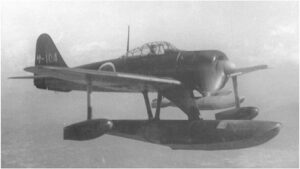
The Nakajima A6M2-N was a single-crew floatplane aircraft created in 1941 and based on the Mitsubishi A6M Zero Model 11.
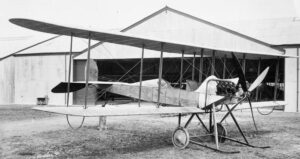
The Royal Aircraft Factory B.E.2 was a British single-engine, two-seat biplane designed by the Royal Aircraft Factory and used during WW1.
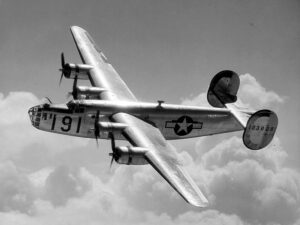
The Consolidated B-24 Liberator was an American heavy bomber aircraft featuring a highly efficient high aspect ratio Davis wing.
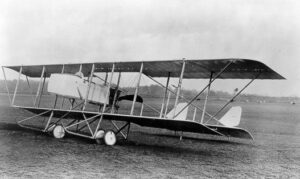
The Farman MF.11 Shorthorn is a French reconnaissance and light bomber used during the early part of World War I.
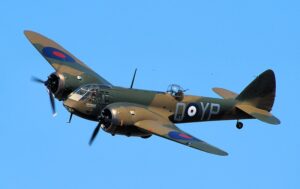
The Bristol Blenheim was a British light bomber aircraft used extensively in the first two years of the Second World War.
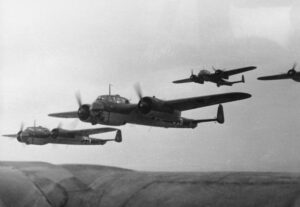
The Dornier Do 17 was a German twin-engined light-bomber produced by Dornier for the German Luftwaffe during World War II.

The Republic F-105 Thunderchief is an American supersonic fighter-bomber capable of Mach 2 but with high loss rates.
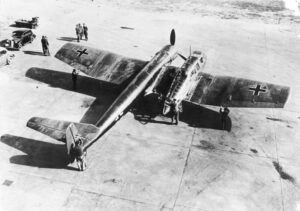
The Blohm & Voss BV 141 (originally known as the Ha 141) was an asymmetrical World War II German tactical reconnaissance aircraft.
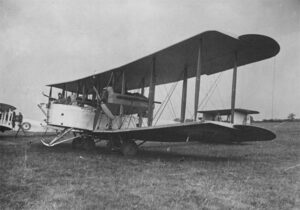
The Vickers Vimy was a British heavy bomber manufactured by Vickers Limited and used during the latter stages of the First World War.
A few frequently asked questions (and answers) about airliner aircraft.
Bomber aircraft are specifically designed for delivering ordnance to enemy targets, distinguishing them from other military planes. They possess a larger payload capacity, longer range capabilities, and often incorporate specialized features such as bomb bays or external hardpoints for carrying and releasing munitions.
Bomber aircraft are versatile in their target engagement capabilities. They can be deployed to strike a wide range of targets, including enemy military installations, infrastructure, troop concentrations, and strategic assets. Their missions may involve precision strikes, area bombardment, or interdiction operations to disrupt enemy operations.
Absolutely. Despite advancements in missile technology and unmanned systems, bombers remain highly relevant in modern warfare. They provide long-range strike capabilities, aerial presence, and the ability to carry out both conventional and strategic missions. Bombers offer flexibility in adapting to evolving threats and can project power to deter adversaries, support ground operations, or carry out precision strikes with a high degree of accuracy.