
NASA M2-F1 “Flying Bathtub”
The NASA M2-F1 was one of the oddest-looking aircraft ever to take to the skies—so strange that it earned the nickname “the flying bathtub.”
Aircraft by Type > Airplanes > Prototypes and Experimental
Both prototypes and experimental aircraft play a crucial role in advancing aviation technology and knowledge. They help refine existing aircraft designs, explore new capabilities, and contribute to the overall progress of aviation. So, let’s explore the various prototype aircraft and their evolution.
Prototypes and experimental aircraft refer to specialized types of aircraft that are designed and built for the purpose of testing new technologies, concepts, or configurations.
Prototypes are aircraft built to test and evaluate new designs, systems, or performance characteristics. They are typically the first of their kind and serve as a proof-of-concept for a specific aircraft model or technology. Prototypes allow manufacturers to assess the feasibility and effectiveness of new ideas before proceeding to full-scale production. These aircraft often undergo extensive testing and modifications based on the data collected during their evaluation.
Experimental aircraft, on the other hand, are typically built by individual enthusiasts or small groups to explore unconventional designs, alternative propulsion systems, or other experimental concepts. These aircraft are often built with non-traditional materials, unconventional shapes, or innovative technologies. Experimental aircraft allow aviation enthusiasts and researchers to push the boundaries of aviation and test new ideas outside the constraints of mainstream aircraft design.
Prototypes are essential in aviation for several reasons:
Testing New Designs: Prototypes allow manufacturers to assess the feasibility and effectiveness of new aircraft designs. By building and testing prototypes, engineers can evaluate the aerodynamic performance, structural integrity, and overall functionality of the aircraft before committing to full-scale production. This helps identify potential design flaws or improvements that can be addressed early in the development process.
Performance Evaluation: Prototypes provide an opportunity to evaluate the performance characteristics of an aircraft. Flight tests and simulations help gather data on factors such as speed, range, fuel efficiency, handling qualities, and payload capacity. This information is crucial in determining whether the aircraft meets the desired specifications and performance requirements.
Technology Validation: Prototypes play a significant role in validating new technologies or systems. They allow for the integration and testing of advanced avionics, propulsion systems, materials, or other cutting-edge technologies. This ensures that the new technologies are functional, reliable, and safe before they are implemented in production aircraft.
Regulatory Compliance: Prototypes are subject to certification and regulatory requirements to ensure compliance with safety standards. The testing and evaluation of prototypes help manufacturers demonstrate the airworthiness and compliance of their aircraft with applicable regulations and guidelines. This process is crucial for obtaining the necessary certifications and approvals required for commercial operation.
Prototypes are vital in aviation as they enable manufacturers to refine designs, assess performance, validate new technologies, and ensure regulatory compliance. Here’s the complete database.

The NASA M2-F1 was one of the oddest-looking aircraft ever to take to the skies—so strange that it earned the nickname “the flying bathtub.”
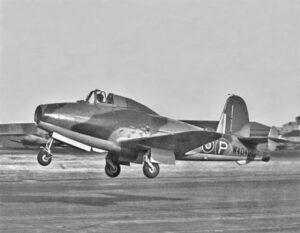
The Gloster E.28/39, first flown in 1941, was the first British jet-engine aircraft and the fourth jet to fly. It led to the Gloster Meteor.

The Northrop YF-17 was an American prototype lightweight fighter aircraft designed for the LWF technology evaluation program.

A true Soviet-era colossus, the K-7 looked like a flying fortress and remains one of the most outrageous aircraft designs in history.
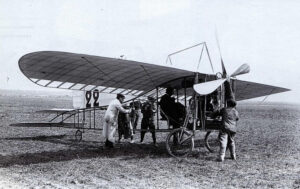
The Wright Flyer or Wright I was an experimental airplane invented and flown in 1903 by brothers Wilbur and Orville Wright.

The Douglas X-3 Stiletto is an American experimental jet aircraft famous for its slender fuselage and long tapered nose.
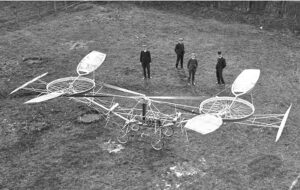
The Cornu Helicopter was a French experimental helicopter widely credited with the first free flight of a rotary-wing aircraft.

The Wright Flyer II was the second powered aircraft built by Orville and Wilbur Wright. It ultimately achieved 105 flights.

The General Dynamics-Boeing AFTI/F-111 Aardvark was a research aircraft used to test a supercritical mission adaptive wing (MAW) built by Boeing.
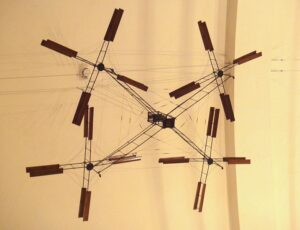
Leonardo’s Aerial Screw was envisioned as a device resembling a large screw or corkscrew-shaped structure that would enable vertical flight.
A few frequently asked questions (and answers) about prototypes.
Prototype aircraft differ from production aircraft in that they are typically the first of their kind and may incorporate experimental features or modifications. They undergo extensive testing and evaluation to assess their performance, aerodynamics, structural integrity, and overall functionality.
The primary purpose of building prototype aircraft is to gather valuable data and insights for design refinement, performance evaluation, and technology validation. Prototypes help identify potential design flaws, optimize performance characteristics, and ensure compliance with regulatory standards before the aircraft enters mass production. They play a critical role in advancing aviation technology and improving the safety and efficiency of future aircraft.
The duration of the prototype aircraft development process can vary significantly depending on the complexity of the design and the specific goals of the project. It may take several years from the initial concept to the completion of a functional prototype. The process involves various stages, including design, engineering, fabrication, testing, and refinement.