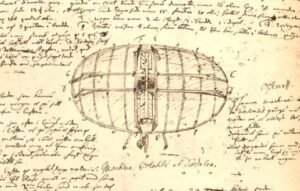
The Swedenborg Flying Machine
The Swedenborg Flying Machine was a sketch made by Swedish scientist Emanuel Swedenborg in 1714. The machine shows a single large wing.

The Swedenborg Flying Machine was a sketch made by Swedish scientist Emanuel Swedenborg in 1714. The machine shows a single large wing.
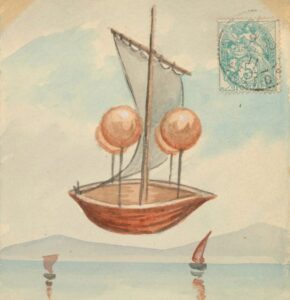
Lana de Terzi’s Flying Boat was an early experimental aircraft built by Enrico Forlanini and Giovanni Battista “Lana” de Terzi in 1905.
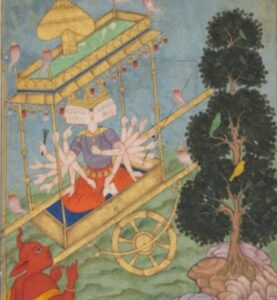
The Vimanika Flying Machines were a range of flying “vimanas” supposedly used in ancient times. The text is subject of debate among scholars.

Leonardo Da Vinci’s Ornithopter was a machine that could allow humans to fly. The design was described in his Codex on the Flight of Birds.
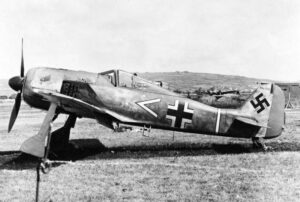
The Focke-Wulf Fw 190 was a German single-seat, single-engine fighter aircraft and the backbone of the Jagdwaffe of the Luftwaffe.
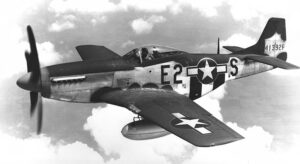
The North American P-51 Mustang is an American long-range, single-seat fighter and fighter bomber used during World War II.
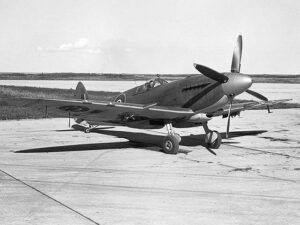
The Supermarine Seafire was a naval version of the Supermarine Spitfire and the Hawker Hurricane. It was used during World War II.
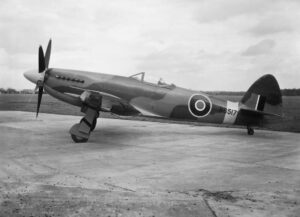
The Supermarine Spiteful was a British Griffon-engined fighter aircraft designed by Supermarine and used during the Second World War.
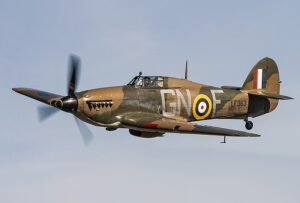
The Hawker Hurricane was a British single-seat fighter aircraft designed in the 1930s and used by the Royal Air Force (RAF) during WW2.
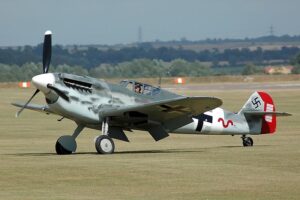
The Hispano Aviación HA-1112 is a license-built version of the Messerschmitt Bf 109G-2 developed in Spain during and after World War II.