What Were Aircraft Like During WW1?
The aircraft used during World War I was still in the early stages of development. However, these machines played a crucial role in the war effort.
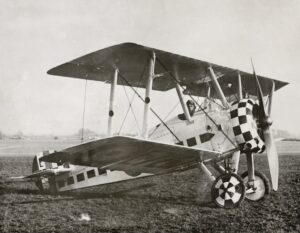
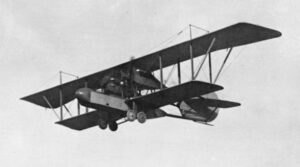
Vickers F.B.5 or Fighting Biplane 5, the "Gunbus".

The aircraft used during World War I was still in the early stages of development, so the technology was much less sophisticated than in modern aircraft. However, these machines played a crucial role in the war effort, providing reconnaissance and fighting capabilities that would change the face of warfare forever.

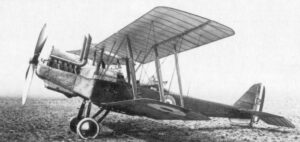
The aircraft of World War I were predominantly biplanes with two sets of wings and were typically made of wood and fabric. Engines were also in their infancy, with most planes being powered by rotary engines that spun the entire aircraft around the engine block. This design meant that aircraft had limited speeds and maneuverability compared to modern aircraft.

What Were Aircraft Used For During World War I?

Aircraft during World War I were used primarily for reconnaissance, with pilots flying over enemy lines to gather intelligence on troop movements and other military activities. Later in the war, aircraft were adapted for use as fighters and bombers, with machine guns and bombs added to their designs. Let’s go through these uses in a little more detail, shall we?

  • Reconnaissance: Aircraft were used for reconnaissance during World War I in a variety of ways. The primary role of reconnaissance planes was to gather intelligence on enemy troop movements and other military activities, which was critical to the success of military operations. This is because they provided a bird’s eye view of the battlefield and allowed for a much greater understanding of enemy positions and movements. Other ways in which planes were used for reconnaissance during the war included aerial photography, visual observation, signal interception, and artillery spotting. 
  • Bombings: Both sides began using aircraft for bombing strategic enemy positions. The primary role of bombing planes was to attack enemy targets, including troop concentrations, fortifications, and supply lines. 
  • Air fighting: As aircraft design progressed, many pilots began incorporating different ways of fighting each other in the air. At first, they could simply throw grenades or shoot at each other using pistols or rifles. In time, mounted machines became the preferred way of shooting down enemy planes, so they were mounted (usually at the front of the aircraft). Because the propeller would get in the way, the Germans invented something called the “interrupter”, which synchronized the bullets to go through at the correct time. Soon, all WW1 fighter planes had this invention, too. 

The Most Popular Aircraft of World War I

The most famous aircraft of World War I was probably the Sopwith Camel, one of the most effective fighter planes of the war. Other significant aircraft designs included the Fokker Eindecker, the first aircraft to be equipped with a synchronized machine gun, and the Airco DH.4, a versatile two-seater used for both reconnaissance and bombing.

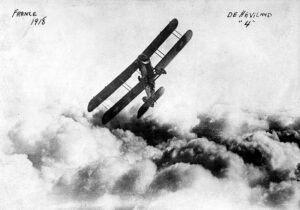
The Airco DH.4 WW1 Airplane

Airco DH.4

The Airco DH.4 is a two-seat biplane airplane designed by Airco for World War I. It became one of the most successful planes of the war.

Read More »

Aircraft Markings of the First World War

There were several reasons why aircraft markings were important during World War I. For one, they were a means of identifying friendly aircraft from enemy aircraft. In the beginning, when there were no standard markings, planes were often painted in the colors of their country’s flag. However, this led to some confusion, so a national insignia was adopted instead. 

In addition to national insignia, aircraft were also marked with unit identification symbols. This helped ground crews and pilots to identify which unit an aircraft belonged to, which was necessary for logistics and maintenance. Many aircraft were also marked with individual identification, such as a unique number or letter. This helped ground crews and pilots keep track of individual aircraft and their maintenance requirements. Lastly, markings were also sometimes used for propaganda purposes. For example, some aircraft were painted with patriotic slogans or images to boost morale and show support for the war effort. 

Overall, markings during WW1 helped to reduce confusion and improve communication between ground crews and pilots, which was critical for the success of military operations.

Aircraft markings of World War I

More Articles

More Aircraft

Sopwith Triplane - British WW1 Aircraft and Warplanes

Sopwith Triplane

The Sopwith Triplane (“Tripe” or “Tripehound”) was a British single-seat fighter aircraft that played a pioneering role in World War I.

Read More »
German WW1 Aircraft: Fokker G.I

Fokker G.I

The Fokker G.I, or “Le Faucheur” (The Reaper), was a heavy Dutch twin-engine fighter and reconnaissance aircraft developed in the late 1930s.

Read More »
Boulton Paul Defiant - British Interwar & WW2 Aircraft and Warplanes

Boulton Paul Defiant

The Boulton Paul Defiant is a British interceptor aircraft designed as a turret fighter. It was used by the Royal Air Force (RAF) during World War II.

Read More »
Yakovlev UT-1 - Soviet WW2 Aircraft & Warplanes - Soviet Air Force

Yakovlev UT-1

The Yakovlev UT-1 was a single-seater trainer aircraft used by the Soviet Air Force during WW2, from 1937 until the late 1940s.

Read More »
The Airco DH.6 WW1 Airplane

Airco DH.6

The Airco DH.6 is a two-seat biplane introduced in 1916 and used during World War I for training pilots and observers.

Read More »
Heinkel He 111 - German WW2 Aircraft & Warplanes - History, Pics

Heinkel He 111

The Heinkel He 111 was a German airliner and bomber described as a “wolf in sheep’s clothing” as it presented solely as a civil airliner.

Read More »