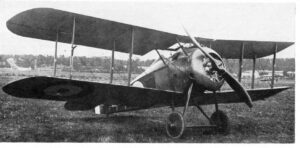
Sopwith Salamander
The Sopwith Salamander was a British ground-attack aircraft designed by the Sopwith Aviation Company and used during the First World War.

The Sopwith Salamander was a British ground-attack aircraft designed by the Sopwith Aviation Company and used during the First World War.
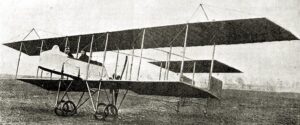
The Grahame-White Type XV was a British trainer biplane produced before and during World War I and often referred to as a “Box-kite.”

The Nieuport 16 was a French single-seat sesquiplane fighter aircraft designed by Gustave Delage and used during World War I.
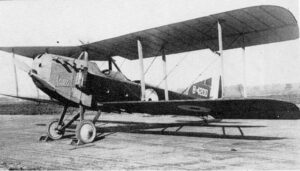
The Armstrong Whitworth F.K.8 is a British biplane used during the First World War. It typically accompanied the better known R.E.8.
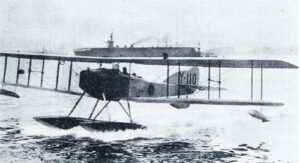
The Yokosuka Ro-go Ko-gata was a Japanese experimental glider used as a reconnaissance floatplane. It was developed during World War I.
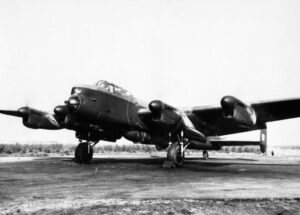
The Avro Lancaster is a WW2 heavy bomber aircraft manufactured in the United Kingdom and was used by the RAF during wartime.

The Lockheed P-38 Lightning was an American twin-piston-engined fighter aircraft developed by the Lockheed Corporation and used during WW2.
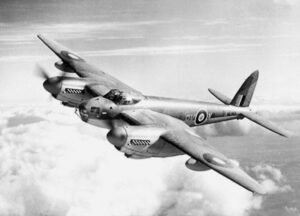
The De Havilland Mosquito is a British twin-engined, multi-role combat aircraft of the Second World War and nicknamed the “Wooden Wonder”.
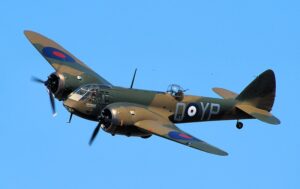
The Bristol Blenheim was a British light bomber aircraft used extensively in the first two years of the Second World War.

The McDonnell Douglas F-4 Phantom II is an American tandem two-seat, two-engine supersonic jet interceptor and fighter-bomber.

The Kawasaki Ki-45 (屠龍) or Dragonlayer was a Japanese two-seat, twin-engine heavy fighter used by the Imperial Japanese Army in World War II.

The Morane-Saulnier N was a French monoplane fighter used during World War I and designed by Morane-Saulnier. It was nicknamed the Bullet.

The Republic F-105 Thunderchief is an American supersonic fighter-bomber capable of Mach 2 but with high loss rates.
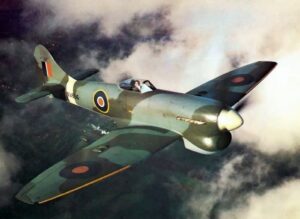
The Hawker Tempest was a British fighter aircraft used by the Royal Air Force (RAF) during the Second World War.
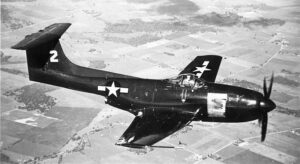
The Curtiss XF15C was an American mixed-propulsion fighter prototype aircraft of which only three were constructed during World War II.

The Bell YFM-1 Airacuda was an American heavy fighter and interceptor aircraft developed by Bell Aircraft Corporation during the mid-1930s.
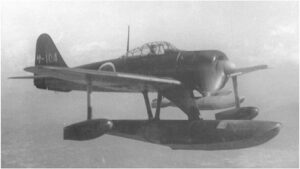
The Nakajima A6M2-N was a single-crew floatplane aircraft created in 1941 and based on the Mitsubishi A6M Zero Model 11.
The McDonnell Douglas F-4 Phantom II is an American tandem two-seat, two-engine supersonic jet interceptor and fighter-bomber.
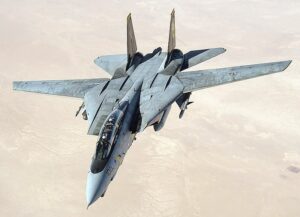
The Grumman F-14 Tomcat is an American supersonic, twin-engine fighter aircraft developed by the United States Navy.
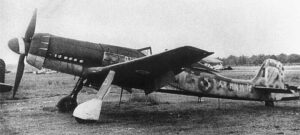
The Focke-Wulf Ta 152 was a World War II German high-altitude fighter-interceptor that entered service with the Luftwaffe in January 1945.

The Bell X-1 was a supersonic research project conceived in 1944 and built by Bell Aircraft for the U.S. Army Air Forces and U.S. Air Force.
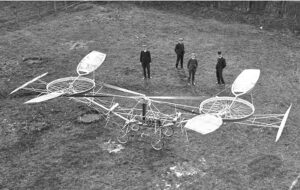
The Cornu Helicopter was a French experimental helicopter widely credited with the first free flight of a rotary-wing aircraft.
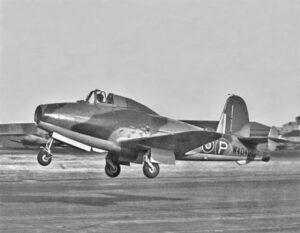
The Gloster E.28/39, first flown in 1941, was the first British jet-engine aircraft and the fourth jet to fly. It led to the Gloster Meteor.

The Bartini Beriev VVA-14 is one of the strangest and most ambitious aircraft built, and a perfect example of Cold War-era Soviet aviation.

The Wright III was an experimental airplane designed by Orville and Wilbur Wright in 1905. It achieved better performance than Flyers I & II.

The Dassault Rafale is a French twin-engine, canard delta wing, multirole fighter aircraft equipped with a wide range of weapons.

The Saab JAS 39 Gripen is a light single-engine multirole fighter aircraft manufactured by the Swedish aerospace and defense company Saab.
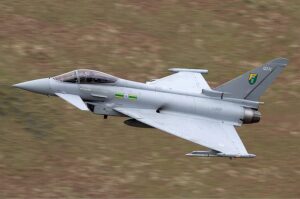
The Eurofighter Typhoon is a European multinational twin-engine, multi-role fighter manufactured by Eurofighter Jagdflugzeug GmbH.

The McDonnell Douglas F-15 Eagle is an American twin-engine air superiority tactical aircraft designed in 1969 and first flown in 1972.

The Dassault Mirage 2000 is a French multirole, single-engine jet fighter designed in the late 1970s to replace the Mirage III.