
Northrop P-61 Black Widow
The Northrop P-61 Black Widow was the first operational U.S. warplane explicitly designed to be a night fighter.

The Northrop P-61 Black Widow was the first operational U.S. warplane explicitly designed to be a night fighter.

The Bombardier CRJ Series is a family of regional jets introduced in 1991 by Canadian aerospace company Bombardier Aerospace.

The Boulton Paul Defiant is a British interceptor aircraft designed as a turret fighter. It was used by the Royal Air Force (RAF) during World War II.
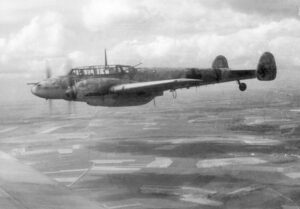
The Messerschmitt Bf 110 was a German twin-engine destroyer fighter-bomber developed in Nazi Germany in the 1930s and used in WW2.

The Lockheed P-38 Lightning was an American twin-piston-engined fighter aircraft developed by the Lockheed Corporation and used during WW2.
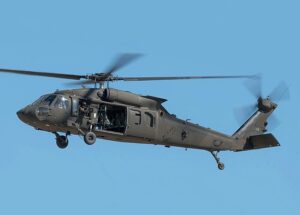
The Sikorsky UH-60 Black Hawk is a four-blade, medium-lift, twin-engine utility military helicopter and winner of the UTTAS program in 1976.
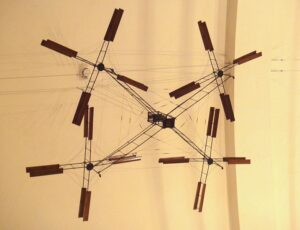
Leonardo’s Aerial Screw was envisioned as a device resembling a large screw or corkscrew-shaped structure that would enable vertical flight.

The Mil Mi-8, known by its NATO reporting name “Hip,” is a Soviet-designed medium twin-turbine helicopter that is widely produced and used.
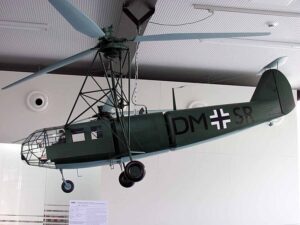
The Focke-Achgelis Fa 223 was a helicopter developed by Germany during World War II and the first one to attain production status.
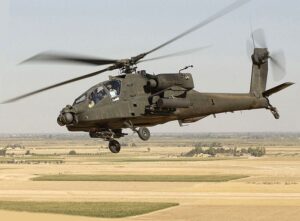
The Boeing AH-64 Apache is an American twin-turboshaft attack helicopter primarily operated by the U.S. Army but used by many nations.
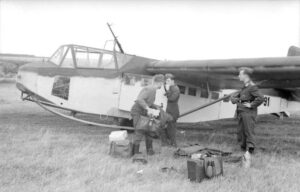
The DFS 230 was a German transport glider developed in 1933 and operated by the Luftwaffe during World War II.
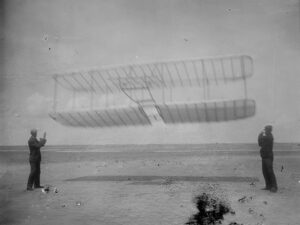
The Wright Glider was a series of four experimental aircraft (1 kite and 3 gliders) designed by Orville and Wilbur Wright in 1900-1902.

The Airspeed AS.51 Horsa was a British troop-carrying glider developed and manufactured by Airspeed and used during the Second World War.
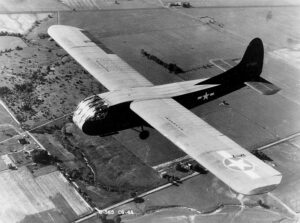
The Waco CG-4 (or Hadrian) was the most widely used American troop and cargo military glider of World War II.
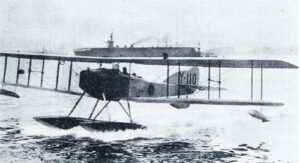
The Yokosuka Ro-go Ko-gata was a Japanese experimental glider used as a reconnaissance floatplane. It was developed during World War I.

His Majesty’s Airship R100, or R100, was a British rigid airship designed and constructed as part of an ambitious experiment in the 1920s.
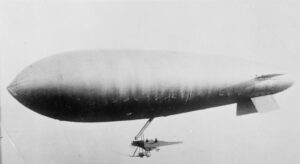
The SS Class Airship were cheap and simple small non-rigid airships or “blimps” designed to counter German U-boats.

The Hindenburg was part of the Zeppelin fleet, built by the Zeppelin Company in Germany. Learn more about its tragic history.
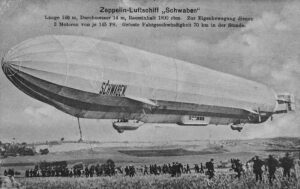
The Zeppelin LZ 10 Schwaben was a German rigid passenger airship built in 1911 by Luftschiffbau Zeppelin and operated by DELAG.
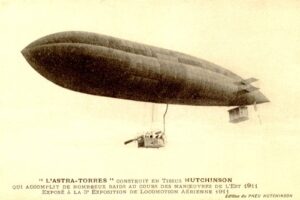
The Astra-Torres Airship was a French non-rigid airship built by Société Astra between 1908 and 1922 and designed by Leonardo Torres Quevedo.

The Breitling Orbiter 3 was a historic hot air balloon that achieved the first successful nonstop circumnavigation of the globe in 1999.

The Virgin Atlantic Flyer was a groundbreaking hot air balloon piloted by entrepreneur Richard Branson and Swedish aeronaut Per Lindstrand.

The Spirit of Freedom was a groundbreaking hot air balloon that marked a historic achievement in aviation. Learn more about it.
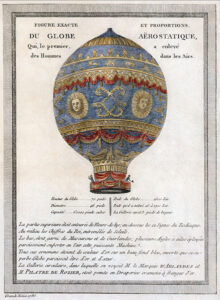
The Montgolfier Brothers’ Balloon was the first manned hot air balloon. It was created in 1783 by Joseph-Michel and Jacques-Étienne Montgolfier.
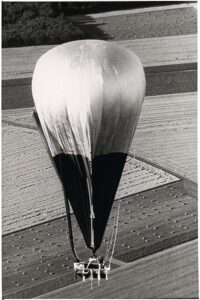
The Double Eagle II was the first balloon to cross the Atlantic Ocean. It left Maine and landed on 17 August 1978 near Paris.