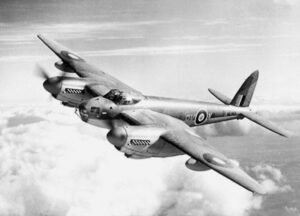
De Havilland Mosquito
The De Havilland Mosquito is a British twin-engined, multi-role combat aircraft of the Second World War and nicknamed the “Wooden Wonder”.

The De Havilland Mosquito is a British twin-engined, multi-role combat aircraft of the Second World War and nicknamed the “Wooden Wonder”.

The Boeing-Stearman Model 75 was an American biplane formerly used as a military trainer aircraft by the U.S. Air Forces and U.S. Navy.
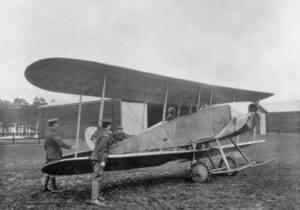
The Royal Aircraft Factory B.E.3 was a British single-engine biplane developed by the British Royal Aircraft Factory before WW1.

The Boeing 747, or “Jumbo Jet,” is a wide-body commercial airliner and cargo aircraft with a distinctive hump on the upper deck.

The Saab 340 AEW&C is an airborne early warning and control aircraft developed by Saab, based on the Saab 340 twin-engine turboprop airliner.
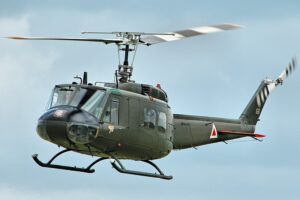
The Bell UH-1 Iroquois is a utility military helicopter and the first turbine-powered helicopter in service with the United States military.
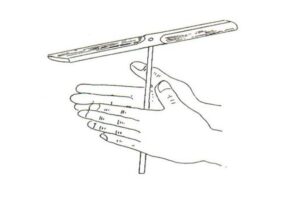
The Bamboo-Copter or Chinese Top is a toy helicopter rotor that flies up when its shaft is spun rapidly. The spinning creates lift.
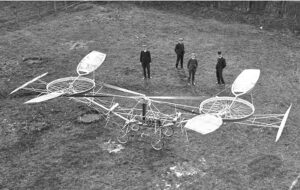
The Cornu Helicopter was a French experimental helicopter widely credited with the first free flight of a rotary-wing aircraft.
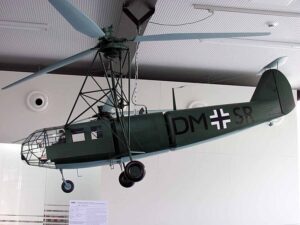
The Focke-Achgelis Fa 223 was a helicopter developed by Germany during World War II and the first one to attain production status.
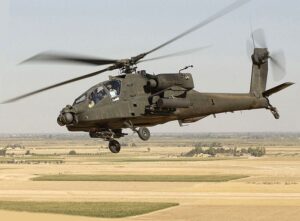
The Boeing AH-64 Apache is an American twin-turboshaft attack helicopter primarily operated by the U.S. Army but used by many nations.
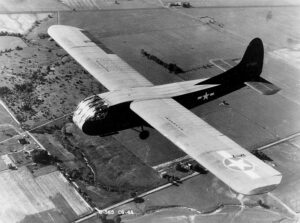
The Waco CG-4 (or Hadrian) was the most widely used American troop and cargo military glider of World War II.

The Airspeed AS.51 Horsa was a British troop-carrying glider developed and manufactured by Airspeed and used during the Second World War.
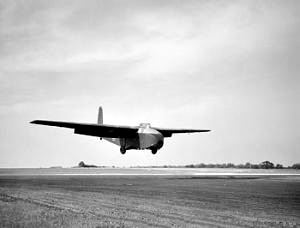
The General Aircraft Hamilcar (or Hamilcar Mark I) was a British military glider produced and used during the Second World War.
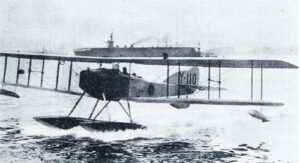
The Yokosuka Ro-go Ko-gata was a Japanese experimental glider used as a reconnaissance floatplane. It was developed during World War I.
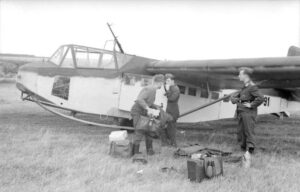
The DFS 230 was a German transport glider developed in 1933 and operated by the Luftwaffe during World War II.
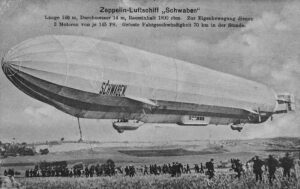
The Zeppelin LZ 10 Schwaben was a German rigid passenger airship built in 1911 by Luftschiffbau Zeppelin and operated by DELAG.
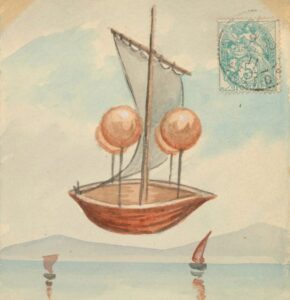
Lana de Terzi’s Flying Boat was an early experimental aircraft built by Enrico Forlanini and Giovanni Battista “Lana” de Terzi in 1905.

His Majesty’s Airship R100, or R100, was a British rigid airship designed and constructed as part of an ambitious experiment in the 1920s.
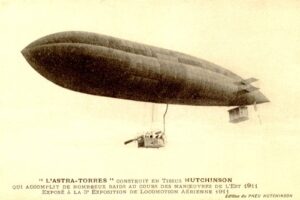
The Astra-Torres Airship was a French non-rigid airship built by Société Astra between 1908 and 1922 and designed by Leonardo Torres Quevedo.
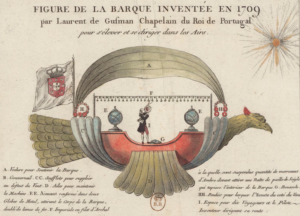
The De Gusmao Steam Airship was a picture and description of an airship made by Bartolomeu Lourenço de Gusmão to King João V in 1709.

The Breitling Orbiter 3 was a historic hot air balloon that achieved the first successful nonstop circumnavigation of the globe in 1999.
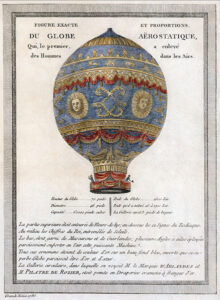
The Montgolfier Brothers’ Balloon was the first manned hot air balloon. It was created in 1783 by Joseph-Michel and Jacques-Étienne Montgolfier.

The Spirit of Freedom was a groundbreaking hot air balloon that marked a historic achievement in aviation. Learn more about it.
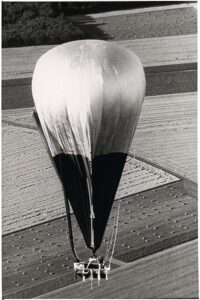
The Double Eagle II was the first balloon to cross the Atlantic Ocean. It left Maine and landed on 17 August 1978 near Paris.

This successful demonstration of hydrogen as a lifting gas paved the way for subsequent manned flights and further developments.